
How to Choose the Best Wall Decor for Your Home

Time:2026-09-19 Author:Madeline
0%

Choosing the right Wall Decor can change how a room feels, functions, and welcomes people. An empty wall may look clean, but it can also make a living room feel unfinished. The best choice depends on more than color. Room size, natural light, furniture placement, and personal habits all matter. A large framed print above a low sofa may create balance, while a small shelf near a doorway can add useful storage. Small details matter.

Reliable wall styling begins with careful observation. Measure the wall before buying anything. Check the hanging height, viewing distance, and frame weight. In a bright room, glass can create distracting reflections. In a narrow hallway, deep objects may interrupt movement. Professional designers often recommend testing paper templates first. This simple step reveals awkward proportions before drilling holes. It also protects your budget.

Your home should not look like a showroom. It should feel lived in. Family photographs, textured baskets, handmade ceramics, or a slightly imperfect painting can add warmth. Still, personal meaning does not excuse poor planning. A meaningful item may clash with the room’s scale or lighting. That is worth reconsidering. Choose materials that suit your climate and cleaning routine. Protect delicate pieces from strong sunlight and damp walls. With practical measurements, trustworthy materials, and a clear sense of your lifestyle, you can create Wall Decor that looks intentional and feels genuinely yours.
How to Choose the Best Wall Decor for Your Home

Define Your Home’s Style, Function, and Wall Decor Goals

Choosing wall decor becomes easier when you define your home’s style, function, and goals. Start by observing what already feels consistent. Notice your furniture shapes, wood tones, lighting, and fabric textures. A room with linen curtains and pale oak may suit calm, natural artwork. A room with dark shelving may need stronger contrast. Do not copy a trend blindly. Your walls should feel connected to daily life.

Function matters as much as appearance. In a narrow hallway, a large mirror can reflect light and make movement feel easier. In a home office, a simple calendar or framed diagram may support concentration. For a bedroom, softer colors can create a quieter mood. Measure the wall before buying anything. I once chose art that looked balanced online but overwhelmed a small sofa. The mistake taught me to test paper templates first.

Tips: Define one clear wall decor goal for each room. Do you want warmth, focus, texture, or a focal point? Keep the artwork’s center near eye level, then adjust it for seating areas. Leave breathing space around furniture. Mix sizes carefully, but repeat one color to create connection. Use removable hooks when testing arrangements. Your first layout may feel wrong. Live with it for one evening before changing everything.

Measure the Wall and Assess Its Layout, Lighting, and Proportions

How to Choose the Best Wall Decor for Your Home

Measure the Wall and Assess Its Layout, Lighting, and Proportions

Start with the wall, not the artwork. Measure its height and width, then note doors, windows, vents, and furniture edges. Leave a clear record on paper. This prevents attractive pieces from feeling strangely crowded.

As a practical guide, wall decor often works best when it spans about two-thirds of the furniture below it. A 2024 Houzz & Home Study reported that 54% of surveyed homeowners completed decorating projects. That figure reflects a strong interest in personal interiors, but more decorating does not guarantee better proportion. Check the viewing distance, too. A small print can disappear above a deep sofa, while an oversized canvas may dominate a narrow hallway.

Lighting changes the wall’s character throughout the day. Observe the surface in morning, afternoon, and evening light. Direct sunlight can fade delicate works, while a dark corner may flatten texture and color. The Illuminating Engineering Society commonly recommends layered lighting, combining ambient, accent, and task sources. For artwork, adjustable accent lighting can reveal brushwork without creating harsh glare. Still, I have found that “perfect” lighting is sometimes too clinical. A little shadow can make a room feel lived-in.

Tips: Use painter’s tape to outline the proposed size. Stand across the room and take a phone photo. Check the artwork beside curtains, flooring, and nearby colors. Leave breathing space around each piece. Measure twice. Relax once.

Choose Suitable Decor Types, Materials, Colors, and Textures

Choosing wall decor well starts with the room’s purpose, not a trend. In a bedroom, soft textiles, muted art, and rounded shapes can reduce visual tension. In a hallway, framed prints or narrow shelves add interest without stealing walking space. The 2024 U.S. Houzz & Home Study reported a median renovation spend of $24,000 in 2023. That investment makes material testing worthwhile.

Choose materials that suit daily conditions. In humid rooms, sealed wood, ceramic, metal, or washable fabric usually performs better than untreated paper. The U.S. Environmental Protection Agency reports that indoor pollutant levels can be two to five times higher than outdoor levels. Therefore, select low-emission finishes and avoid heavily scented adhesives. Check the technical sheet. “Natural” does not always mean safer.

Color should connect with existing flooring, curtains, and daylight. Warm beige can soften cool tile, while deep green may anchor a bright room. Texture adds depth: linen beside smooth glass, carved wood against painted plaster, or matte ceramic near polished metal. The 2024 Global Wellness Economy Monitor valued wellness real estate at $438 billion in 2023, reflecting stronger interest in calming interiors. Still, balance matters. Too many textures feel noisy. Too much symmetry feels staged. I often prefer one imperfect handmade piece, though its uneven edges may bother some viewers. Test samples beside the wall at morning and evening. Colors change more than expected.

How to Choose the Best Wall Decor for Your Home

Choose Suitable Decor Types, Materials, Colors, and Textures

This chart compares the typical Noise Reduction Coefficient (NRC) of common wall decor materials. Higher NRC values indicate greater sound absorption. Fabric panels and acoustic felt are suitable for reducing echo, while painted drywall, glass, and smooth wood create a cleaner visual style with less acoustic absorption. Color mainly affects brightness and mood, while texture and surface depth have a stronger influence on sound control.

NRC values are typical approximate figures for commonly used wall finishes and can vary according to thickness, installation method, surface area, and backing materials.

Arrange Wall Decor for Balance, Spacing, and Visual Harmony

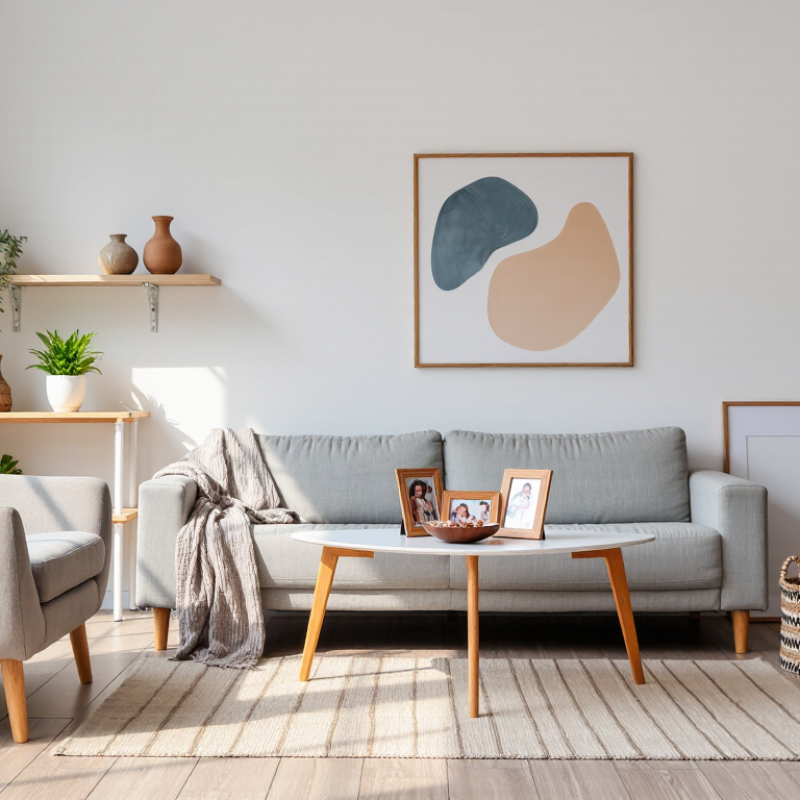
When choosing wall decor, start with the wall’s visual weight, not the empty space alone. I usually place the largest piece near eye level, then build outward with smaller forms. A low sofa needs artwork positioned close enough to feel connected, usually six to eight inches above it. Too much space makes the arrangement look detached. Too little space feels crowded. Measure twice.

Balance does not require perfect symmetry. A large framed print can sit opposite two smaller pieces if their combined visual weight feels similar. Keep consistent gaps, often two to four inches, but adjust them for scale. A narrow hallway may need a vertical arrangement, while a wide dining wall can support a horizontal line. Step back several feet after each change. I once centered a display from the wall instead of the furniture, and it looked subtly wrong. The room, not the plaster, should guide the composition.

Tips: Use odd groupings for a relaxed rhythm, and align one edge to create order. Repeat one color from nearby textiles or furniture for visual harmony. Leave some wall visible. Room to breathe. Check the arrangement in daylight and evening light. If one item keeps demanding attention, it may be too bright, too large, or simply misplaced. Good design can remain slightly imperfect. That makes the room feel lived in.

How to Choose the Best Wall Decor for Your Home - Arrange Wall Decor for Balance, Spacing, and Visual Harmony

Wall Decor Type Recommended Placement Spacing Guideline Best Visual Role Suitable Rooms Balance Tips
Large Artwork Center above a sofa, bed, console, or dining sideboard. Leave about 15–25 cm between the artwork and the furniture below. Creates a strong focal point and anchors a large wall. Living rooms, bedrooms, dining rooms, entryways. Choose artwork that is approximately two-thirds to three-quarters the width of the furniture beneath it.
Gallery Wall Arrange around a central point on a broad, visible wall. Keep 5–8 cm between frames for a cohesive arrangement. Adds personality, rhythm, and layered visual interest. Hallways, staircases, living rooms, home offices. Use a consistent outer shape or frame color to keep different pieces visually connected.
Mirror Place opposite or near a window to reflect available light. Center it at a comfortable viewing height, usually with its midpoint around eye level. Makes a room feel brighter, deeper, and more open. Entryways, bedrooms, dining rooms, compact living areas. Avoid reflecting clutter or an unattractive view; use the frame to support the room’s style.
Wall Shelf Install on an empty wall or above a desk, console, or reading area. Leave enough vertical clearance for objects and comfortable access. Combines display space with practical storage. Kitchens, offices, bedrooms, living rooms. Mix tall, medium, and low objects while leaving some open space to prevent visual heaviness.
Textile or Tapestry Hang on a broad wall where texture and softness are needed. Keep the lower edge visually connected to nearby furniture rather than floating too high. Introduces warmth, texture, and sound-softening surfaces. Bedrooms, living rooms, reading corners, offices. Balance a highly textured piece with simpler furniture and nearby accessories.
Decorative Plates or Baskets Group in an organic cluster on a dining, kitchen, or entryway wall. Use consistent small gaps, generally 5–10 cm, depending on the size of each piece. Creates a relaxed pattern and adds handcrafted texture. Kitchens, dining rooms, breakfast areas, entryways. Start with the largest piece near the center and arrange smaller pieces around it.
Wall-Mounted Lighting Place beside a bed, mirror, artwork, or seating area. Install at a height that provides useful light without shining directly into the eyes. Adds function, vertical rhythm, and a warm evening layer. Bedrooms, hallways, living rooms, home offices. Use matching pairs for symmetry or one fixture to balance a visually dominant object.
Clock Position where it is easy to read without interrupting the main focal point. Leave sufficient surrounding wall space so the face does not appear crowded. Provides practical information and a clear circular accent. Kitchens, offices, entryways, living rooms. Match its scale to the wall; an oversized clock can dominate a small room.
Quick Arrangement Checklist: Center the main composition, keep spacing consistent, align artwork with nearby furniture, vary height and scale carefully, and leave enough empty wall space for the arrangement to breathe.

Set a Budget and Select Durable Pieces for Long-Term Appeal

A realistic budget protects your walls from rushed choices. Harvard’s Joint Center for Housing Studies reported $472 billion in homeowner improvement and maintenance spending in 2022. That figure shows how quickly home projects can absorb available money. Set a separate wall-decor limit before browsing. Include frames, mounting hardware, delivery, and installation. Leave a small reserve for mistakes.

Prioritize materials that tolerate sunlight, dust, and regular cleaning. Solid wood, metal, glass, and archival-quality paper usually age better than thin plastic or poorly sealed finishes. The National Association of Realtors’ 2023 Remodeling Impact Report gave interior painting a 10 out of 10 Joy Score. It also reported 107% cost recovery for interior painting. A well-finished wall can therefore support both daily comfort and future appeal. Measure twice. Buy once.

Check the piece from several angles. Look for tight frame joints, stable backing, smooth edges, and secure hanging points. Ask about cleaning instructions and replacement parts. Avoid oversized art that leaves no flexibility when furniture changes. I have made that mistake; the wall looked impressive, but the room became difficult to rearrange. Durable decor should adapt, not dominate. FSC’s 2023 Facts and Figures report also emphasizes traceable responsible forestry, making certified wood a more accountable option. Still, certification does not guarantee perfect craftsmanship. Inspect the object yourself, and accept that personal taste may change.

FAQS

How can I match wall decor with my home’s existing style?

Observe furniture shapes, wood tones, lighting, and fabric textures. Pale oak and linen suit calm, natural artwork. Dark shelving may need stronger contrast. Do not follow trends blindly. Your walls should connect with daily life.

How does a room’s function affect wall decor?

A large mirror can brighten a narrow hallway and improve its sense of movement. A calendar or framed diagram may support office focus. Softer bedroom colors can create a quieter mood. Appearance is only part of the decision.

How should I choose the correct artwork size?

Measure the wall and nearby furniture before buying. Use paper templates to test the artwork’s footprint. Keep the center near eye level. Adjust it lower for seated viewing areas. Online proportions can mislead you.

How can I arrange several wall pieces successfully?

Leave breathing space around furniture and between artworks. Mix sizes carefully. Repeat one color to connect different pieces. Removable hooks help during testing. Your first arrangement may look wrong.

Should I live with an arrangement before changing it?

Yes, leave it in place for one evening. Notice it under daylight and evening lighting. The room may feel different after several hours. I once changed everything too quickly. That was probably unnecessary.

How can I set a realistic wall-decor budget?

Create a separate limit before browsing. Include frames, mounting hardware, delivery, and installation. Keep a small reserve for mistakes. A low price can become expensive after replacements. Plan for the complete wall.

Which materials usually last longer?

Solid wood, metal, glass, and archival-quality paper often tolerate daily use better. Check their response to sunlight, dust, and cleaning. Thin plastic may age poorly. Durable does not mean flawless.

What should I inspect before buying framed decor?

Look for tight frame joints, stable backing, smooth edges, and secure hanging points. Ask about cleaning instructions and replacement parts. Inspect several angles. Certification can support responsible sourcing, but it cannot guarantee craftsmanship.

Why should I avoid oversized wall art?

Oversized pieces may leave little flexibility when furniture changes. A large work can overwhelm a small sofa or dominate a room. I made that mistake once. The wall looked impressive, but rearranging became difficult.

What is the main goal of durable wall decor?

It should support the room without controlling it. Choose pieces that suit your current life and allow future changes. Personal taste can shift. That possibility deserves space.

Conclusion

Choosing the best Wall Decor begins with understanding your home’s overall style and the atmosphere you want to create. Consider whether your space feels modern, traditional, minimalist, or eclectic, then define the purpose of the wall, such as adding color, highlighting a focal point, displaying memories, or improving an empty area. Before selecting pieces, measure the wall carefully and examine its layout, natural light, furniture placement, and proportions. These details will help you choose artwork, mirrors, shelves, textiles, or other decorative elements that fit comfortably and enhance the room.

When selecting Wall Decor, combine suitable materials, colors, and textures to support visual interest without making the space feel crowded. Arrange pieces with balanced spacing and a clear relationship to nearby furniture, allowing the display to feel intentional and harmonious. Finally, set a realistic budget and prioritize durable, well-made items that can maintain their appearance over time. Thoughtful planning ensures that your wall decoration reflects your personality while remaining practical, balanced, and appealing for years.

Madeline

Madeline

Madeline is a dedicated marketing professional with a wealth of expertise in our company's core offerings. With a keen understanding of the industry, she brings a unique perspective to her role, consistently delivering high-quality content that highlights the superior aspects of our products. As......